
Root Canal Therapy in Edmonton, AB
Experience pain-free root canal therapy with Edmonton’s most advanced endodontic microscope technology. Save your natural tooth with precision treatment designed for lasting comfort and results.
 Gallery Dental
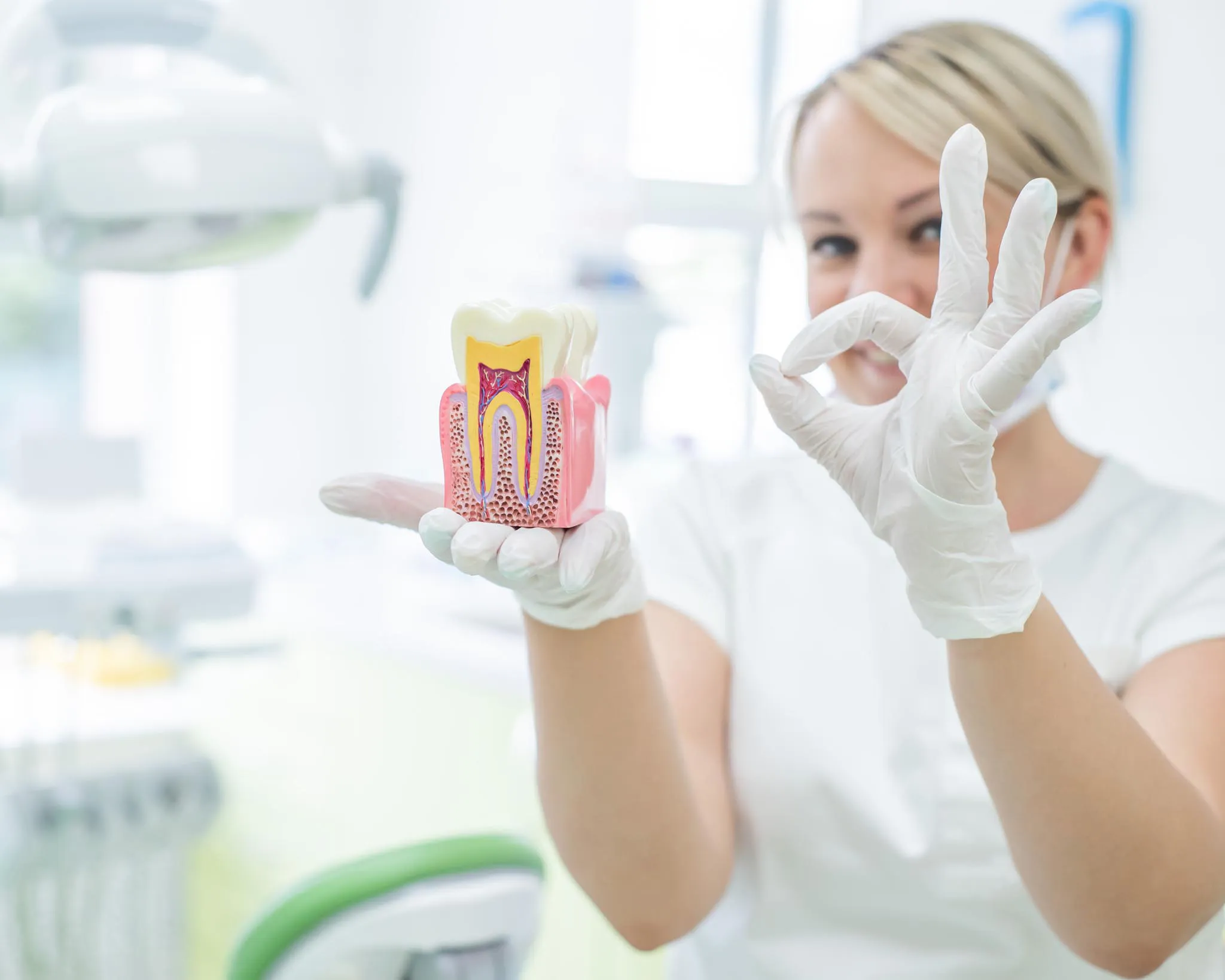
Saving Infected Teeth with Modern Root Canal Therapy
A root canal removes infected tissue inside your tooth, stopping the pain, clearing the infection, and preserving what’s still healthy. When bacteria reach the pulp through a crack or deep decay, the result is intense pain and, if untreated, tooth loss. Modern root canal therapy cleans and seals the canal system so your natural tooth can last decades.
Why Gallery Dental?
Our office is one of the few general dental offices in Edmonton that uses Global Surgical Microscopes. Our microscope offers 25x magnification, allowing Dr. Sekhon to treat complex cases with superior accuracy. This technology detects cracks and canals invisible to the naked eye, significantly improving success rates and preserving more natural tooth structure.
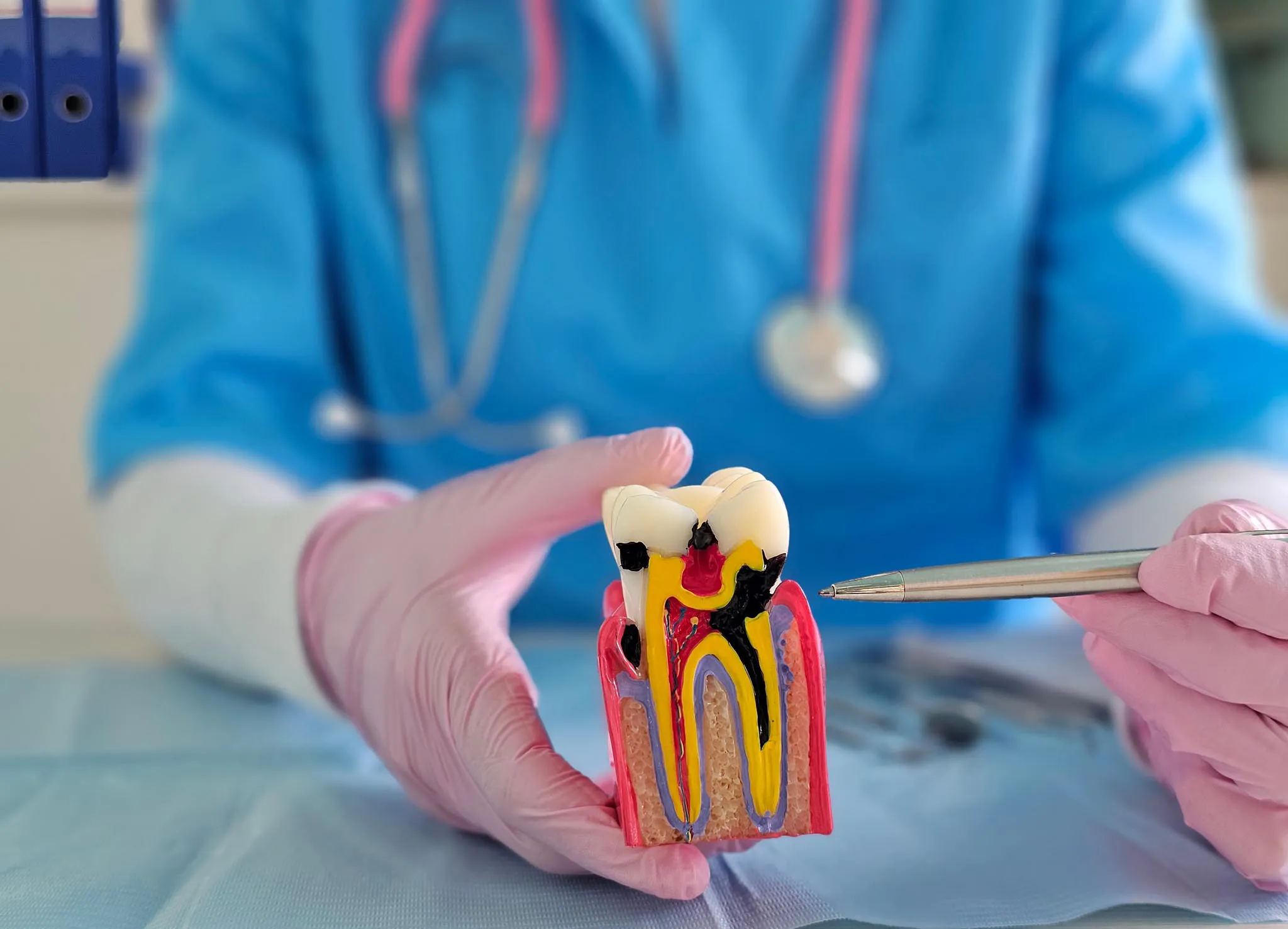

Do You Need a Root Canal? Don’t Ignore These Signs!
If you are experiencing tooth pain that is worsening, don’t ignore it! Early detection can often save a tooth that might otherwise need extraction.
If you experience any of the following symptoms, schedule an exam immediately:
Severe toothache that over-the-counter pain relief can’t touch
Pimple-like bump on the gum draining pus
Hot or cold sensitivity lasting more than 30 seconds
Pain when biting or pressing on the tooth
Tooth darkening or a grayish tint (nerve damage)
Persistent bad taste or bad breath
Swollen or tender gums near the affected tooth
Tooth feeling loose or shifting
Call immediately if you have facial swelling, fever, or uncontrolled pain. These are signs of a serious infection (abscess) that requires emergency dental care to prevent it from spreading.
The Root Canal Treatment Process
Here is what you can expect when you come into our office for root canal therapy.
01
Examination & Diagnosis
Oral conscious sedation involves taking a prescribed sedative pill before your appointment. By the time treatment begins, you’ll feel deeply relaxed and drowsy, but conscious and responsive. Many patients describe it as a dreamlike state.
Dr. Sekhon prefers this method because it delivers powerful anxiety relief with no IV needle required. A responsible adult will need to drive you home, with effects typically wearing off by evening.
02
Local Numbing and/or Sedation
Your comfort is our priority. During your root canal appointment, we begin by applying a topical gel and then administer local anesthesia to completely numb the tooth and surrounding area. You shouldn’t feel a thing.
If you are anxious, we can administer your chosen sedation (nitrous oxide, oral, or IV) at this stage.
03
Advanced Diagnostic Technology
We place a “dental dam” (a small protective sheet) around the tooth. This keeps the tooth dry and sterile, preventing saliva or bacteria from entering the canals during treatment.
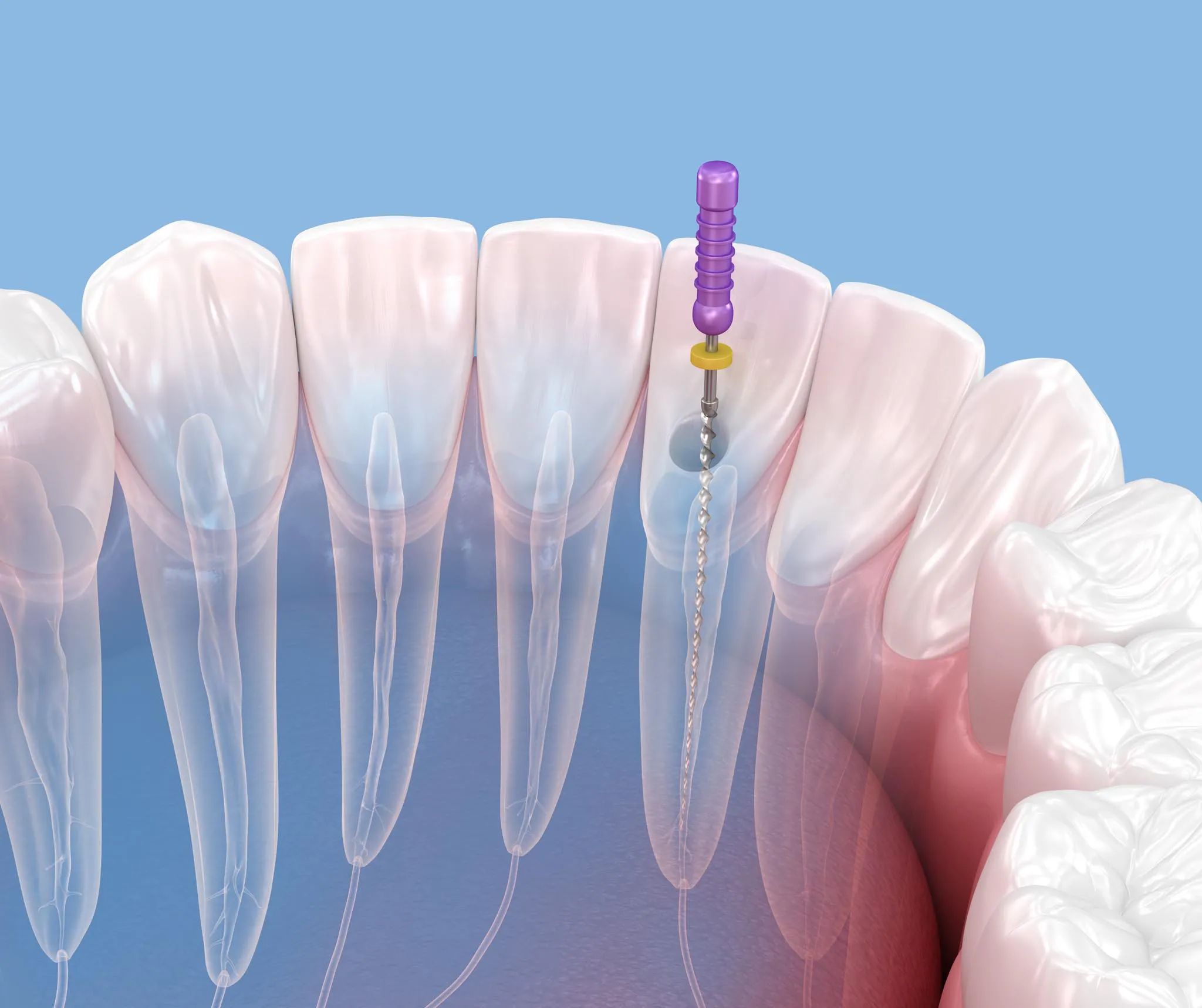
Dr. Sekhon then uses an endodontic microscope to visualize the inside of your tooth at 25x magnification. We carefully remove the infected pulp and clean the canals using specialized files and antimicrobial rinsing solutions.
The clean canal is sealed with a rubber-like material, then covered with a temporary filling. Your permanent crown is placed 2–3 weeks later. This appointment should last about 60–90 minutes.
04
Follow-Up and Crown Placement
Because the tooth is now more fragile, we typically schedule a follow-up visit to place a permanent dental crown. This reinforces the tooth structure, allowing it to withstand normal chewing forces.
Advanced Tools for Superior Results
Most general dentists perform root canals using only magnifying loupes (glasses), which offer limited visibility. At Gallery Dental, we use Global Surgical Microscopes that provide up to 25x magnification and high-intensity LED illumination.
Why this matters for your tooth:
Finding Hidden Canals
Missed canals are a leading cause of root canal failure. The microscope allows us to find tiny, hidden branches that standard vision would miss.
Preserving Tooth Structure
Better visibility means we can make smaller openings, keeping your tooth stronger.
Detecting Cracks
We can spot microscopic fractures early, preventing future complications.
This technology allows us to perform specialist-level endodontics in a comfortable general dentistry setting!

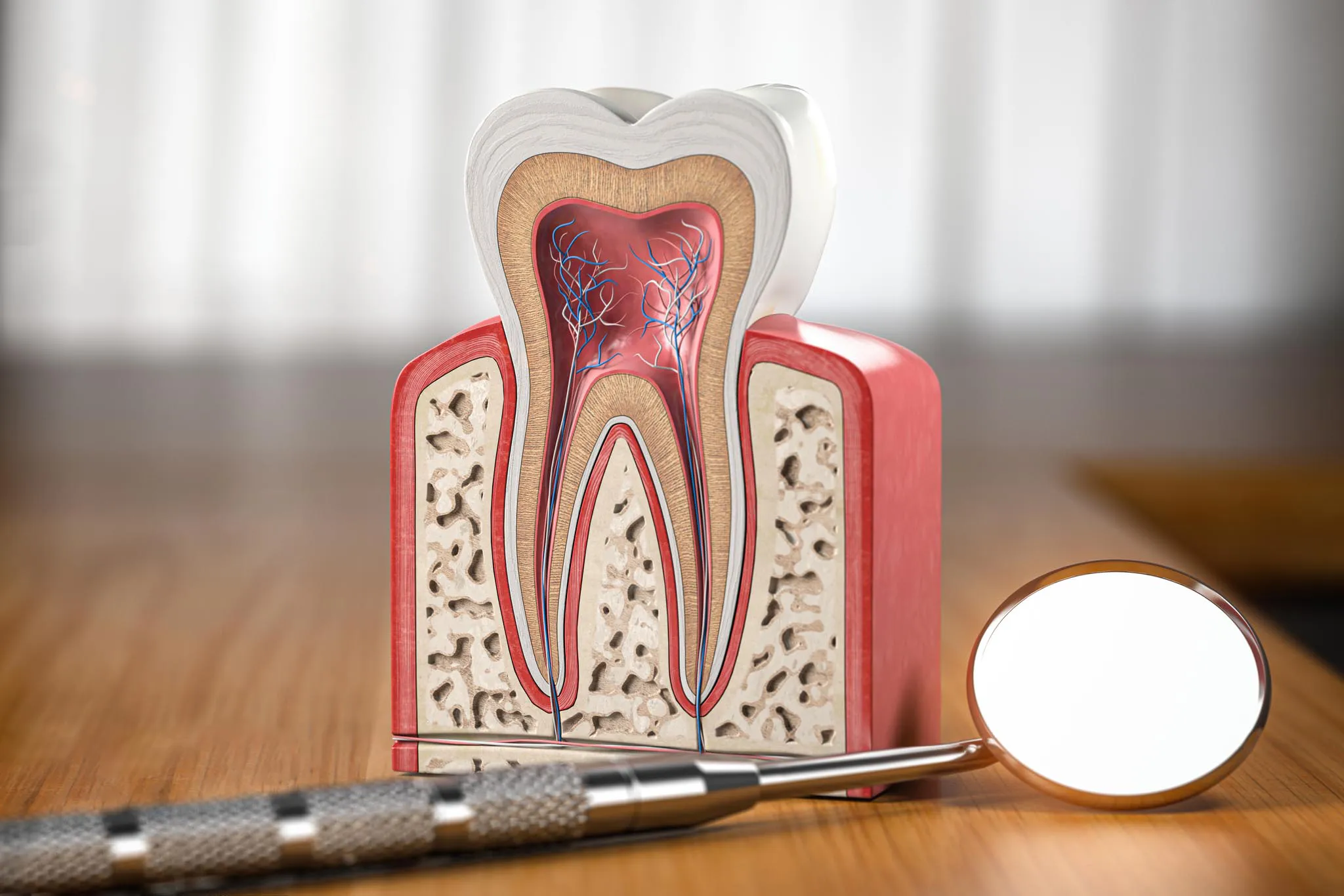
Sedation Dentistry Options
If you’re experiencing anxiety about getting a root canal, you’re not alone! Around 40% of Canadian adults feel some level of anxiety about dental work.
To help you feel more comfortable, we offer in-office sedation to help you relax:
Nitrous Oxide (Laughing Gas)
Takes the edge off and wears off immediately so you can drive home.
Oral Conscious Sedation
A pill taken before your appointment for deeper relaxation (requires a ride home).
How Much Does Root Canal Treatment Cost in Edmonton?
We believe in financial transparency. Our fees follow the Alberta Dental Fee Guide, ensuring you pay fair, standard rates for your care. Root canal costs vary based on the number of canals in the tooth (front teeth have fewer canals than back teeth).
We direct bill to most insurance plans. We are happy to provide a full breakdown and submit a prerequisite to your insurance company to see what your coverage is.
If you do not have coverage, or for any out-of-pocket costs, we offer flexible financing options to make saving your tooth affordable.
Estimated Costs (Based on the 2025 Alberta Dental Association Guidelines):
| Tooth Type | No. of Canals | Typical Fee Code | Estimated Cost* |
| Front Tooth (Anterior) | 1 Canal | 33111 | ~$761+ |
| Premolar (Middle) | 2 Canals | 33121 | ~$1,108+ |
| Molar (Back) | 3+ Canals | 33131 | ~$1,296+ |
*Note: These are estimates for routine cases and doesn’t include the cost of a crown. Complexity (such as calcified canals or difficult access) and sedation may incur additional fees.
Common Questions About Root Canal Therapy
Is root canal treatment painful?
Not necessarily! Local anesthesia fully numbs the area, and most patients feel nothing during the procedure. We offer nitrous oxide, oral sedation, and comfort amenities for anxious patients. Root canal therapy usually marks the end of the pain!
Do I need a crown after root canal therapy?
Usually, yes—especially for molars that bear chewing forces. The treatment weakens remaining tooth walls, and a crown prevents fractures. Front teeth with minimal damage may only need a filling. Dr. Sekhon evaluates each case.
How successful are root canal treatments?
Root canal therapy has a 95–98% success rate, and treated teeth can last a lifetime with proper care. Our endodontic microscope improves those odds by catching hidden canals that standard techniques miss.
What are the alternatives?
Extraction is the only alternative. While it removes the infection, it leads to bone loss, shifting teeth, and the eventual need for an implant or bridge, which costs significantly more. Root canal therapy preserves your natural tooth, your bite, and your wallet.
Take the First Step to Comfortable, Pain-Free Root Canals at Gallery Dental
Some people experience anxiety when it comes to root canals, but our gentle team, comfort amenities, and sedation options mean you can rest assured that your root canal will be effective and pain-free.

Hear What Our Patients Are Saying

